

HOW SPIRAL® WORKS
From Light to Tubular Focus
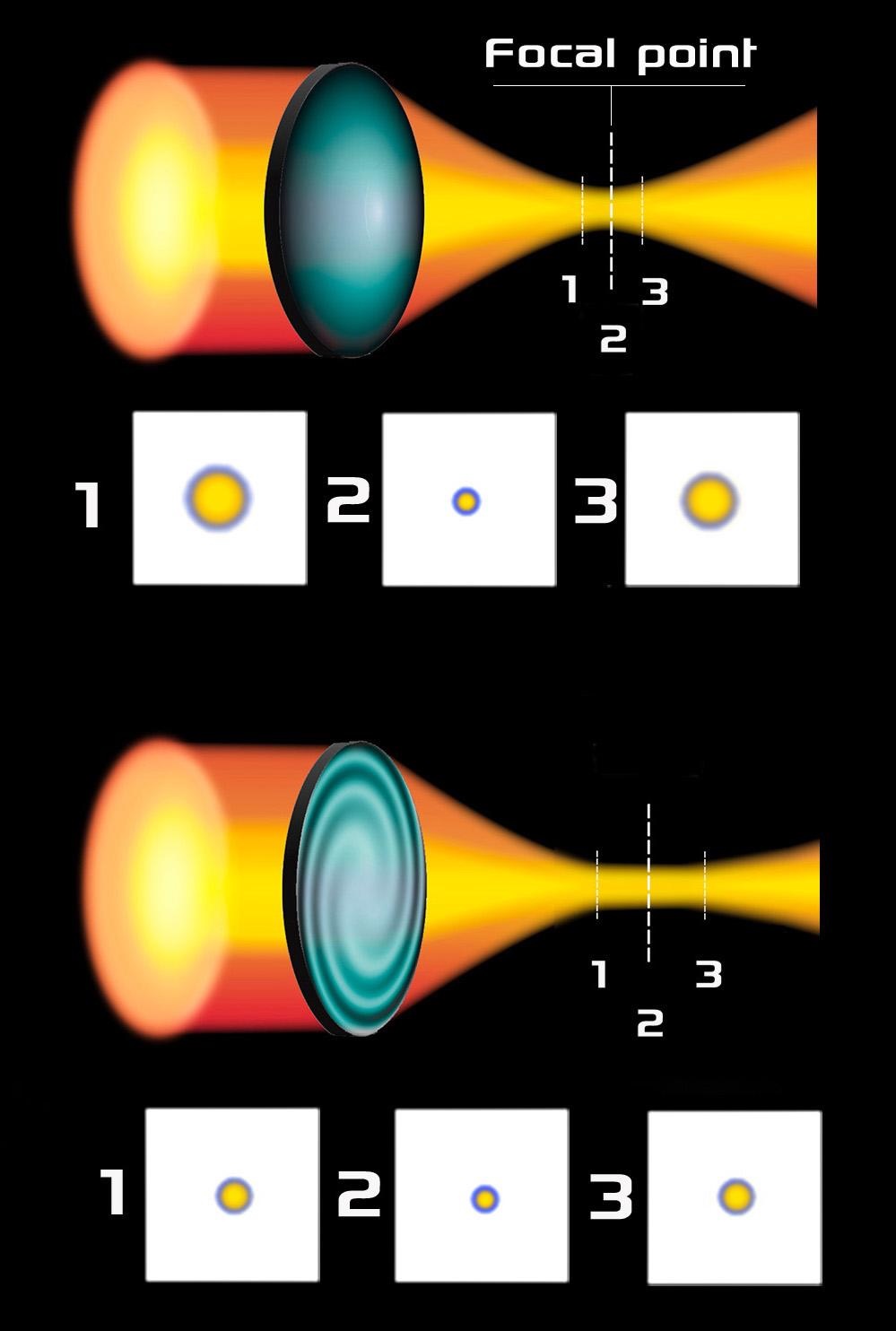
Traditional optics focus light at a single point. SPIRAL® changes that.
By re-engineering the very surface of a lens, we create a spiral diopter that bends light into a tubular focus, unlocking multiple focal zones and extended depth of field — all inside a single, compact optical element.
WHY IT MATTERS
SPIRAL™’s unique light-shaping capabilities make it ideal for :
Building with blocks and patterns is super easy and f! You can design beautiful landing pages with just a few clicks.
✴
Imagery
SPIRAL™ lenses deliver sharper, deeper images by extending the depth of field and maintaining high resolution across multiple focal planes — ideal for cameras, sensors, and embedded optical systems.
✴
Intraocular implant
By generating multiple focal zones in a single compact element, SPIRAL™ enables IOLs that restore near, intermediate, and distance vision without diffractive halos or stacked optics.
✴
Contact lenses & Eyeglasses
SPIRAL™ brings true multifocal performance. Integrating spiralized optics into eyewear and contact lenses opens the door to adaptive, wide-depth vision correction.
✴
Microscopy
The tubular focus created by SPIRAL™ extends the field of view and improves depth perception, enabling clearer imaging of three-dimensional structures without mechanical refocusing.
✴
Laser
Spiralized optics reshape laser beams into vortex-like profiles that can encode depth, concentrate energy, and improve precision in applications such as machining, surgery, and photonics research.
✴
Lighting
By redistributing light into a controlled tubular focus, SPIRAL™ optics enable more efficient and targeted illumination, enhancing performance in automotive lighting, projection systems, and advanced photonic devices.

THE PRINCIPLE
A new optical principle : spiralization
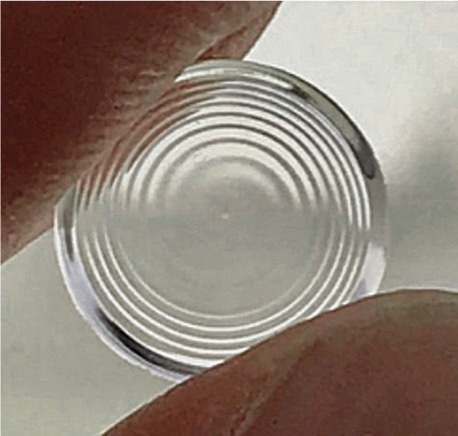
SPIRAL™ introduces a spiralized surface geometry — the spiral diopter — applied to freeform lenses. Inspired by natural spiral patterns, this surface redistributes optical power across the lens, creating a tubular focus instead of a single focal point.
This controlled redistribution enables:
- Optical vortices that twist light to encode depth and improve image qualit
- Multiple focal zones without stacked elements.
- Extended depth of field (EDOF) with stable performance.
HOW IT WORKS
How we shape light differently
1
Spiral geometry applied
The diopter is patterned following a Fermat-like spiral, dividing the surface into zones of different curvature.
2
Redistribution of optical power
These zones control how light converges, creating several focus points instead of one.
3
Formation of tubular focus
The result is a continuous zone of sharpness rather than a single focal plane.
4
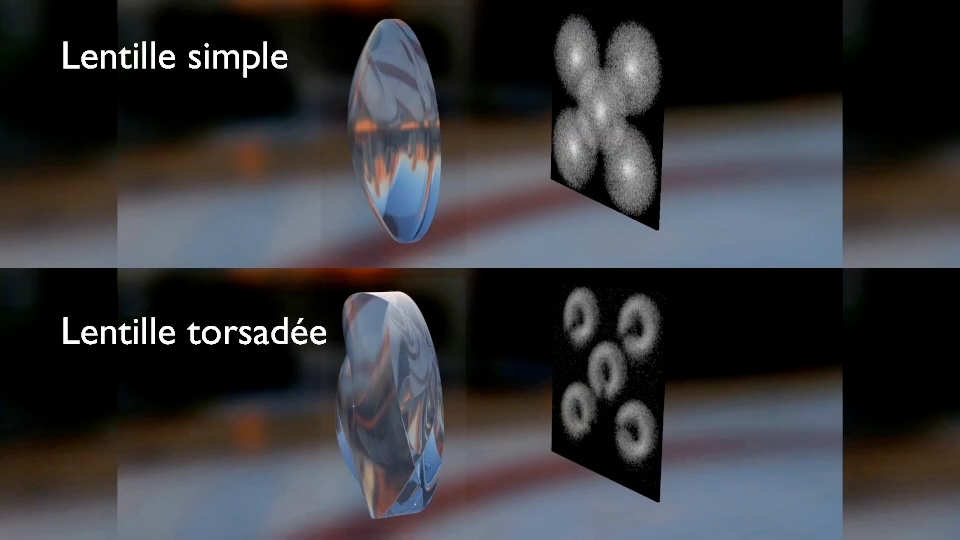
Optical vortices emerge
Light twists around the optical axis, improving depth encoding and resolution.
WHAT THIS CHANGES
A breakthrough in optical behavior
Multiple focal zones
Up to four focus regions demonstrated in lab tests.
Consistent performance
Multifocality maintained even as aperture changes.
Sharper imaging
Improved modulation transfer function (MTF) compared to trifocal lenses.
Compact & wearable
Enables new generations of contact lenses, IOLs, and embedded optics.
WHY IT’S REVOLUTIONNARY
Limits of Traditional Optics
✴
Single focal point
Standard lenses focus light on one plane, forcing trade-offs between near and far vision.
✴
Sensitivity to pupil size
Performance shifts with aperture changes, reducing quality in real-world conditions.
✴
Bulky designs
Achieving multifocality often means stacking elements or using diffractive rings — not ideal for contact lenses or embedded devices.
Want to know more ?
We are currently seeking for industrial partners.
Let’s work together towards the future of optics !